Key Takeaways
- What is an onward ticket?
- Why do airlines and border officers ask for one?
- Is an onward ticket a real ticket?
- What is the difference between onward, return and round-trip?
- Who needs an onward ticket?
In This Article
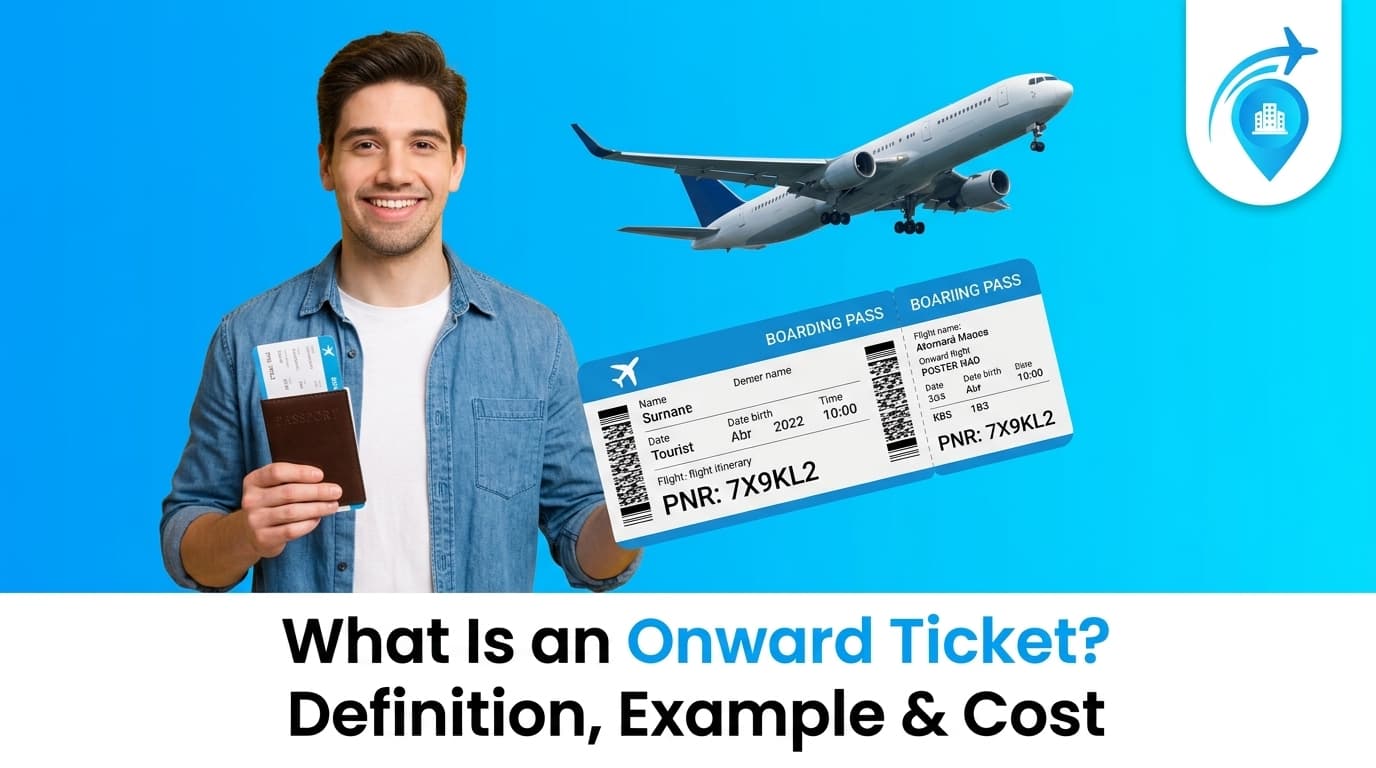
An onward ticket is a real airline reservation showing you leaving a country, held in the airline's own system without being paid for. It is a booking, not a purchase. You can look it up on the carrier's website using its six-character reference. ReservationPoints issues one from £5, valid for 48 hours as standard.
What is an onward ticket?
It is a seat held in an airline's reservation system, in your name, on a real flight out of the country you are entering — and never paid for.
Airline systems keep two separate records. The first is the reservation: the booking itself, with a six-character reference, sometimes called a PNR. The second is the ticket: the financial document that says the seat has been bought. An onward ticket is the first without the second.
That is why it can exist at all. A reservation costs the airline nothing to hold, so airlines allow one to sit unpaid for a limited period before it lapses. The industry name for that deadline is a ticket time limit: the moment by which the booking must be paid for or it falls out of the system on its own. Nobody cancels it. It simply expires.
Ours is held for 48 hours as standard, extendable to seven days at checkout. That window is the product. A longer hold is worth more because it survives a delayed appointment or a rescheduled flight; a shorter one is cheaper because the seat goes back sooner.
Why do airlines and border officers ask for one?
They are two different checks, made by two different people, for two different reasons — and only one of them is about you.
The airline checks first, at the desk. If it carries a passenger who is then refused entry, the airline is the one that has to fly them back, so it looks for evidence you can leave before it lets you board. The border officer checks second, and is deciding whether to admit you at all.
Between them sits a system most travellers never hear of. IATA publishes Timatic, the database check-in agents use to look up what a destination requires. IATA states that over 700 million passengers' travel documents are checked using it each year, drawing on over 2,000 government and airline officials, with — in IATA's own words — "on average around 70 updates per day" (the same page also cites up to 200 daily rule changes). When an agent asks you for proof of onward travel, this is usually why.
Two things follow from that, and they explain most of the confusion travellers report. The first is that the agent is reading a screen, not applying judgement: if the entry says onward travel is required, they will ask, whatever your plans are. The second is that the rule can change between the day you book and the day you fly, because those updates land daily. A requirement that was not there last month can be there this month.
Is an onward ticket a real ticket?
No, and the distinction matters more than the name suggests. It is a real reservation. It is not a purchased ticket, and it will not board a plane.
What it is: a genuine booking held in the airline's system, which resolves when someone types the reference into that airline's own lookup page. What it is not: something you can fly on.
That lookup is the part worth testing yourself. Most airlines have a "manage booking" or "my trips" page that takes a surname and a booking reference, and a real reservation will come back with the flight on it. If a booking reference does not resolve on the carrier's own website, it will not resolve at the desk either, whatever the document it came on looks like.
That is exactly what makes it useful, and it is why it is cheap. You are paying for a real record to exist, not for a seat. If you want one, you can order an onward ticket from £5, with delivery usually about 24 hours as standard, 8 to 10 hours urgent, or 1 to 2 hours super fast — usual times rather than a slot we can guarantee.
What is the difference between onward, return and round-trip?
They describe where the flight goes, not what kind of record it is. Any of the three can be a paid ticket or an unpaid reservation.
A return or round-trip ticket brings you back to where you started. An onward ticket takes you somewhere else — out of the country you are entering, to anywhere at all. If you fly into Bangkok and out to Kuala Lumpur, that second flight is onward travel; it is not a return.
This matters because requirements are usually written in terms of leaving, not returning. The EU Visa Code is a useful example, because it is published and you can read it: Annex II lists a "reservation of or return or round ticket" among the supporting documents a consulate may ask for. The word the instrument uses is reservation.
That is worth sitting with. The legal text behind a Schengen application asks for a booking, not a purchase — and Article 14(1) of the same regulation asks for documents showing you have the means to return, rather than a paid ticket proving you already have. A great many pages on this subject tell you a consulate demands a bought ticket. The instrument those consulates work from does not say that.
Who needs an onward ticket?
Anyone whose route into a country does not already show them leaving it — most often people flying one-way, and visa applicants asked to evidence their travel plan.
Two common cases. The first is arriving one-way somewhere that expects proof you will leave; the airline asks at check-in. The second is a visa application where the checklist asks for a flight booking, and buying a ticket before a decision means risking the money if the answer is no.
There is a third case, less obvious and more common than it looks: a traveller with an open plan. Someone leaving to travel overland, or who has not decided where they are going next, still has to satisfy a check written on the assumption that everybody has a fixed itinerary. A held reservation answers the check without pretending to a plan that does not exist yet.
Whether any particular country or consulate requires it is their rule, not ours, and it changes. Check the rule for your own nationality and destination before you travel — and check it close to the date, given how often the underlying entries are updated.
What is an onward ticket NOT?
It is not a guarantee, and it is not a document to hide behind. Those are the two mistakes worth naming plainly.
It does not guarantee entry, boarding or a visa. Nobody selling one can promise that, because the decision belongs to a border officer or a consulate. Our refunds cover us failing to deliver; they do not cover a refusal.
It is not a fake. It is a real booking. That is the whole product, and it is why we tell you to check it yourself on the airline's own site before you travel, using the reference we send you. A document that only looks right is a different thing, sold by different people, and it fails the moment somebody types the reference in.
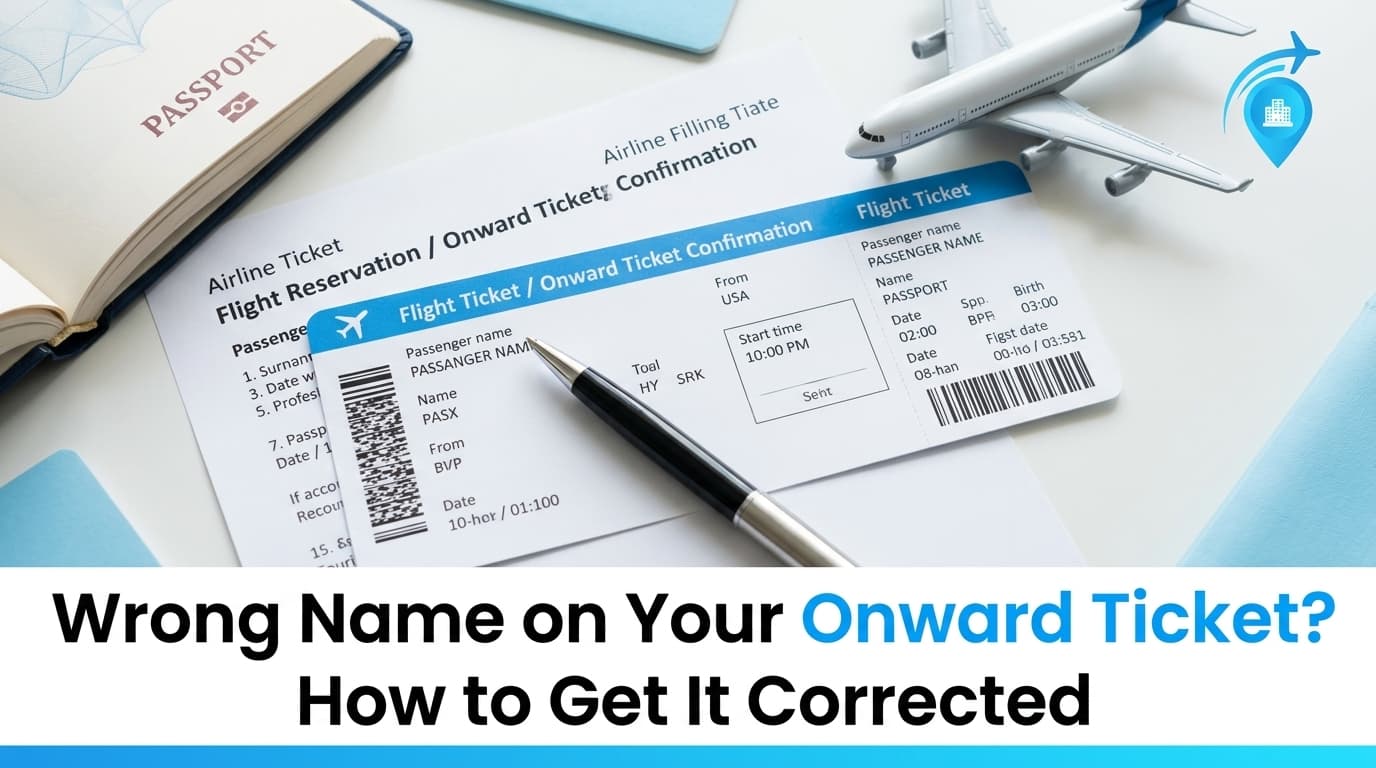
It is also not permanent. It is a held booking, and holds expire — 48 hours as standard. If the name on it does not match your passport, that is a onward ticket name correction, and it is worth fixing before you get to the desk rather than after.
Need a verified reservation today?
Get a flight itinerary or hotel booking with a real PNR you can look up on the carrier’s own site — delivered to your inbox.
Travel Documentation Expert at ReservationPoints
Helping travelers navigate flight & hotel reservations, visa documentation, and embassy requirements worldwide.