Key Takeaways
- What are Schengen countries?
- How does the Schengen visa work?
- Top destinations to visit in Schengen countries
In This Article
Introduction
If you're planning to explore Europe, Schengen countries should be at the top of your list. Schengen countries are a group of 27 countries that have abolished passport and other types of border control at their mutual borders.
This means that once you enter a Schengen country, you can travel freely within the Schengen zone without having to go through immigration checks at the borders.
This not only makes your travels hassle-free but also allows you to explore multiple countries without any additional paperwork or waiting periods. In this blog post, we'll explore why Schengen countries are your gateway to exploring Europe hassle-free.
What are Schengen countries?
The Schengen Agreement has made traveling between Schengen countries remarkably convenient. There are currently 27 member countries of the Agreement, including Austria, Belgium, Czech Republic, Denmark, Estonia, Finland, France, Germany, Greece, Hungary, Iceland, Italy, Latvia, Liechtenstein, Lithuania, Luxembourg, Malta, Netherlands, Norway, Poland, Portugal, Slovakia, Slovenia, Spain, Sweden, and Switzerland.
With the common visa policy, travelers only need one visa to visit multiple Schengen countries. Additionally, non-EU countries like Iceland, Norway, Switzerland, and Liechtenstein are also part of the Schengen Agreement, further simplifying travel within Europe.
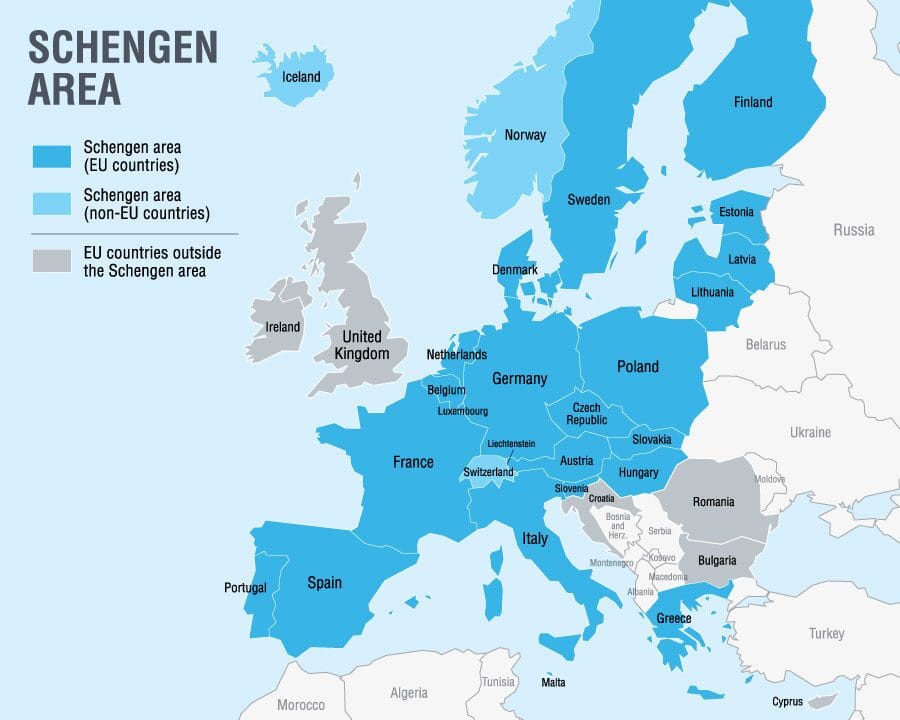
The Schengen Agreement
The Schengen Agreement is undoubtedly one of the most influential treaties in modern European history. It was signed in 1985 in Schengen, Luxembourg, and aimed to remove border controls between participating countries and enable people and goods to move freely within the region.
Currently, there are 27 countries that are part of the Schengen area, which includes most of the EU. Thanks to this Agreement, travel and trade between these nations have become much more comfortable and hassle-free. And it's no surprise that the Schengen Agreement has had a significant impact on tourism and trade within Europe.
List of Schengen countries
The Schengen Agreement signed by 27 countries has created a unified area allowing for travelers to move around without being stopped at borders. The Schengen countries have abolished passport control and other types of border control at their mutual borders, making traveling between these countries much more convenient.
These countries share common visa policies, which means travelers only need one visa to visit multiple Schengen countries. The Schengen Area allows for free movement of people, goods, and services among member states, enabling a vibrant exchange of cultures and commerce. This has impacted not only tourism, but also trade within Europe.
Here is the list of Schengen countries
| Österreich | Belgium | Croatia | Czech Republic |
| Denmark | Estonia | Finland | France |
| Deutschland | Griechenland | Hungary | Island |
| Italien | Lettland | Liechtenstein | Litauen |
| Luxemburg | Malta | Niederlande | Norwegen |
| Polen | Portugal | Slowakei | Slowenien |
| Spanien | Schweden | Schweiz |
Arten von Schengen-Visa
Wenn Sie eine Reise in die Schengen-Länder planen, ist es wichtig, sich mit den verschiedenen verfügbaren Visaarten vertraut zu machen.
Es gibt drei Arten von Schengen-Visa:
- Einheitliche Schengen-Visa (USV)
- Schengen-Visa mit begrenzter territorialer Gültigkeit (LTV)
- Nationale Visa.
Einheitliche Schengen-Visa (USV) erlauben Reisenden, sich frei im Schengen-Raum zu bewegen für maximal 90 Tage innerhalb eines Zeitraums von sechs Monaten. Andererseits bieten Schengen-Visa mit begrenzter territorialer Gültigkeit (LTV) nur begrenzten Zugang zu bestimmten Schengen-Ländern und sind nicht für die Reise in alle Mitgliedsländer gültig.
Nationale Visa, auch als Typ-D-Visa bekannt, ermöglichen es dem Inhaber, sich in einem bestimmten Schengen-Land für einen längeren Zeitraum aus Gründen wie Arbeit, Studium oder Familienzusammenführung aufzuhalten. Bevor Sie Ihre Reise planen, sollten Sie also den Visatyp wählen, der am besten zu Ihren Bedürfnissen und Zwecken passt.
Schengen-Kurzaufenthaltsvisa
Wenn Sie eine Geschäfts- oder Urlaubsreise nach Europa planen, ist ein Schengen-Kurzaufenthaltsvisa ein Muss. Dieses Visa ermöglicht es Ihnen, sich frei in den 27 Ländern des Schengen-Raums für bis zu 90 Tage zu bewegen.
Die Beantragung eines Schengen-Kurzaufenthaltsvisas ist ein unkomplizierter Prozess, der das Ausfüllen eines Online-Antragsformulars, die Bereitstellung biometrischer Daten und das Einreichen von Unterlagen wie Reiseversicherung, Flugreiserouten, Hotelreservierungen und Finanznachweise umfasst.
Sie können wichtige Dokumente wie Flugreiserouten und Hotelreservierungen problemlos über einen lokalen Agenten oder eine Online-Plattform wie Reservation Points, which offers 24/7 chat support to assist you with any issues.
The fee for adults to apply is €80, while minors are required to pay a fee of €40. Keep in mind that while the Schengen short-stay visa allows you to visit multiple countries, you must apply for the visa at the embassy or consulate of the country where you will be spending most of your time or your first point of entry. Processing time can vary, so it's best to apply well in advance of your travel dates.
Schengen long-stay visa
If you are looking to extend your stay beyond 90 days in the Schengen countries, a Schengen long-stay visa might be the solution for you. As a non-EU citizen, this type of visa allows you to stay in the Schengen area for an extended period for work, study, or family reunion.
However, the application process is quite complex and requires extensive documentation, including proof of sufficient funds and medical insurance. So, it is crucial to apply well in advance as the processing time can take several months.
Additionally, be aware that even with this visa, there may still be restrictions and requirements that you will have to follow, such as registering with local authorities upon arrival.
Schengen airport transit visa
If you're a citizen of a country that doesn't have a visa exemption agreement with the Schengen area, and you need to travel through one of the airports in a Schengen country, you may need to apply for a Schengen Airport Transit Visa.
This type of visa allows you to transit through the airport without entering the Schengen area. The visa is usually valid for a maximum stay of either 24 or 48 hours, depending on the country's rules.
To apply, you'll need to submit the necessary documents, pay a fee, and attend a visa appointment at the relevant embassy or consulate.
How to apply for a Schengen visa?
To obtain a Schengen visa, there are several steps you need to follow. First, carefully fill out the Schengen visa application form with your personal information and travel details. It is essential to book your flight tickets and accommodation in advance as you need to provide these details in the application form.
Next, pay the visa fee and submit all required documents such as your passport, travel insurance, and bank statement to the embassy or consulate.
After submitting your documents, schedule an appointment for an interview with the embassy or consulate to discuss your travel plans and provide biometric information. Remember to be thorough and organized throughout the process to ensure the best chances of obtaining your Schengen visa hassle-free.
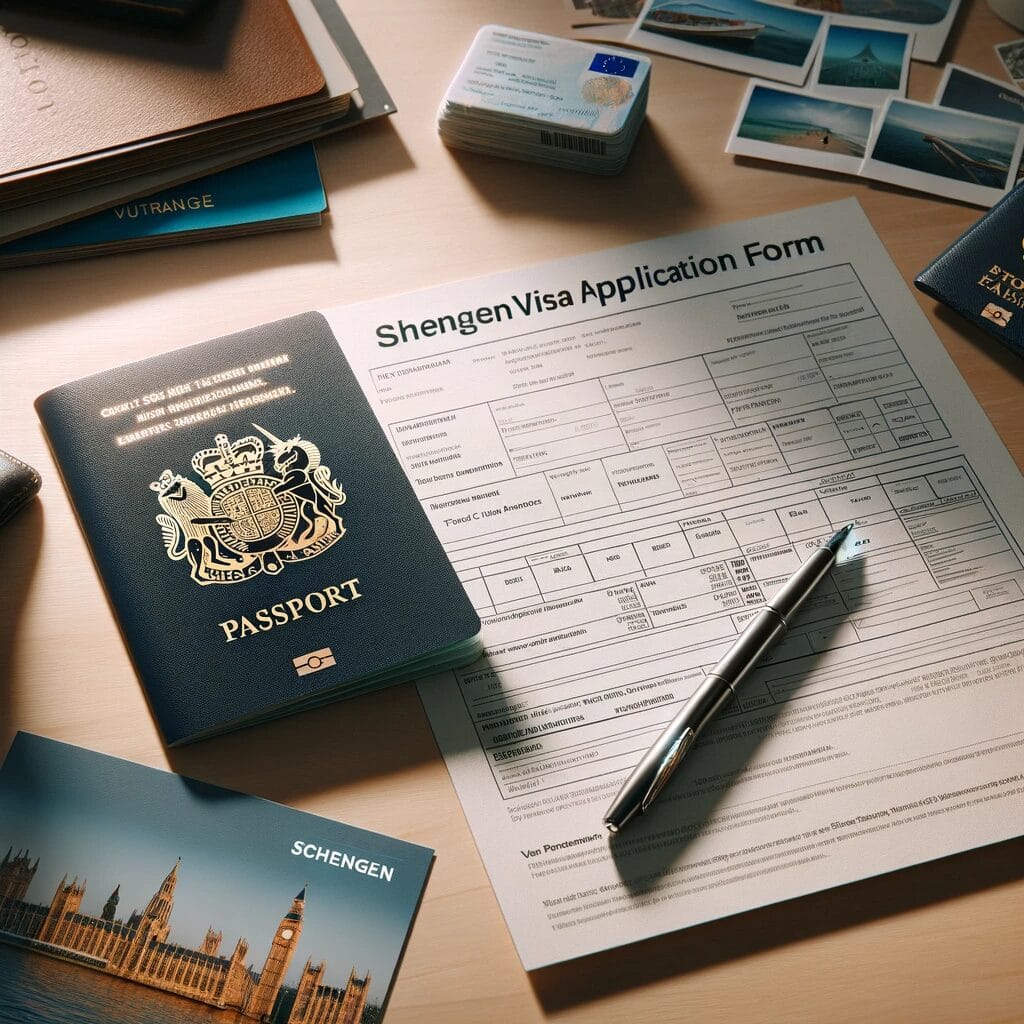
To apply for a Schengen visa, there are certain documents that you need to provide. These include a valid passport with at least two empty pages, a completed visa application form, a travel itinerary and proof of accommodation, a travel insurance policy that covers medical and emergency expenses, and evidence that you have enough funds to cover your expenses during your stay in Schengen countries.
These documents are necessary to ensure that you are granted a hassle-free visa and can fully enjoy your time exploring everything these countries have to offer.
Schengen visa application process
If you're planning on visiting any of the Schengen countries, you must go through a Schengen visa application process.
This process involves submitting a completed application form with the required supporting documents, including a valid passport, proof of financial means, travel insurance, and a round-trip flight itinerary.
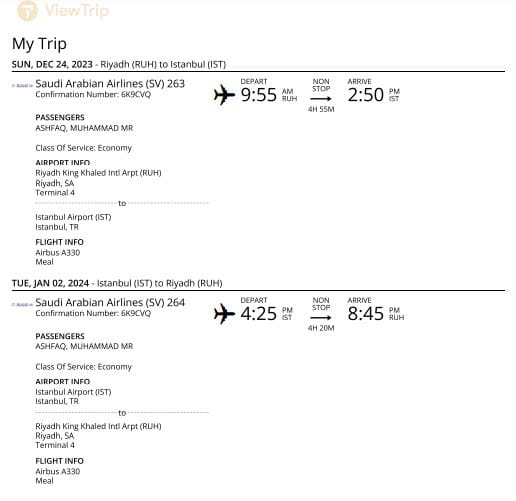
Flight Itinerary Sample
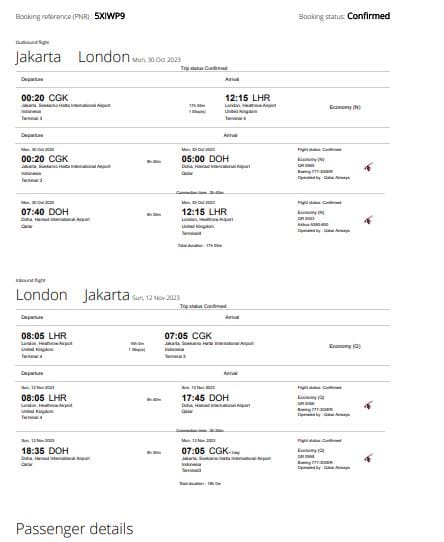
Additionally, you'll need to pay a non-refundable visa fee and attend a visa interview at the embassy or consulate of the Schengen country you plan to visit.
When applying for a Schengen visa, there are several important things to keep in mind. First and foremost, ensure that you have all the necessary documents, including a valid passport, travel insurance, flight reservation, and proof of accommodation. It is also crucial to provide accurate and truthful information in your application and avoid any errors or inconsistencies.
Additionally, demonstrating strong ties to your home country, such as a stable job, property ownership, or family connections, can increase your chances of being granted a visa.
Lastly, be sure to apply well in advance of your planned travel dates to allow sufficient time for processing and avoid any last-minute stress or disappointment.
How does the Schengen visa work?
A Schengen visa is a valuable document that allows visitors to explore any of the 27 countries that are part of the Schengen Area without any additional visas or border controls. With just one visa, visitors can travel freely within the countries in the Schengen Area for up to 90 days within a 180-day period. .
It is essential to note that travelers must apply for the visa at the embassy or consulate of the country they plan to enter first or the country they will be staying the longest.
A Schengen visa holder can, however, move seamlessly throughout the Schengen countries, making it a highly convenient option for exploring Europe without any hassle.
Who needs a Schengen visa?
The Schengen Area offers 90 days of visa-free travel to individuals who want to explore its 27 countries for tourism, business, or transit purposes.
However, citizens from countries that are not part of the European Union or European Free Trade Association and those who are not beneficiaries of a visa waiver agreement must apply for a Schengen visa.
This is especially important for those who plan to visit multiple countries in the Schengen Area during their trip, ensuring they have a hassle-free travel experience.
Why travel to Schengen countries?
Visiting Schengen countries provides you with a unique mix of cultures and landscapes to explore. From the beautiful beaches to the historic cities and picturesque villages, Schengen offers a wide range of destinations.
One of the best things about traveling within Schengen is that it's easy due to the lack of internal borders, making it very convenient to move from one country to another. Moreover, the region also boasts a rich history, art, and architecture that offer a glimpse into Europe's fascinating past. Whether you're a history buff or a nature lover, Schengen has something to offer for everyone.
Hassle-free travel within Schengen countries
The Schengen Agreement has made traveling within the Schengen countries much simpler and hassle-free. This is because the countries within the Schengen area have abolished passport and other types of border control at their mutual borders, which means that visitors only need to go through a single border control check when entering or leaving the Schengen area.
Travelers with a valid Schengen visa can move between the member countries without any additional documentation or formalities, making it a highly convenient option for those who want to explore Europe without any hassle.
Less time-consuming border checks
Waiting in long lines at border checkpoints can be a major inconvenience for travelers exploring Schengen countries. However, implementing digital border control measures can help alleviate this issue. Automated passport control systems enable fast and efficient verification of passengers' identities, while biometric scanning technology can further expedite border checks.
Additionally, streamlining immigration policies and investing in better infrastructure can help reduce wait times at border checkpoints, improving the overall travel experience for visitors to the Schengen Area.
Ease of planning travel itinerary
Traveling to Schengen countries can be an exciting adventure, but it can also be overwhelming to plan all the details of the trip. However, using online travel planning tools can simplify the process of creating a detailed itinerary for a trip. Researching and pre-booking activities, accommodations, and transportation in advance can save time and reduce stress during a trip.
Additionally, it's important to allow for flexibility in the schedule and downtime to make for a more enjoyable travel experience. Consulting with locals or a travel agent can also provide insider tips and recommendations for activities and attractions off the beaten path, making the trip even more special and memorable.
Rich cultural experiences
Traveling to different countries offers a window into unique traditions and customs that vary from one culture to another. Participating in cultural events and festivals provides an opportunity to appreciate diverse aspects of a culture such as art, music, and culinary traditions.
Engaging with the locals and experiencing their way of life is an eye-opening experience that enhances an individual's understanding of cultural diversity.
Furthermore, taking the time to learn a new language not only provides an avenue for effective communication but also provides a deeper understanding of a culture's beliefs and values.
Top destinations to visit in Schengen countries
The Schengen countries are a gateway to exploring Europe hassle-free, and with so many incredible destinations to choose from, it can be hard to decide where to go first. France is a popular choice, offering a mix of iconic landmarks like the Eiffel Tower and Notre-Dame, as well as a vibrant culture filled with wine, cheese, and fashion. Italy is another dream destination, with its incredible art, food, and history.
Visitors can take a gondola ride in Venice or visit Vatican City, offering unparalleled experiences. Spain beckons to tourists with its picturesque plazas, colorful architecture, and stunning beaches along the Mediterranean coast. And for those fascinated by history and traditional Christmas markets, Germany has much to offer visitors with its modern cities and fascinating past.
Paris, France
Paris, the capital and largest city of France, is a destination that should definitely be on your bucket list. With a population of 2.2 million people, the city is renowned for its romantic ambiance, exquisite cuisine, and elegant fashion.

Visitors come from far and wide to marvel at Paris's iconic landmarks, such as the Eiffel Tower, Louvre Museum, and Notre-Dame Cathedral. As a global center for art, fashion, and culture, Paris attracts millions of visitors every year, making it one of the most visited cities in the world.
Barcelona, Spain
Barcelona, the capital of the Catalonia region in Spain, is the second-largest city in the country and a popular tourist destination. The city is renowned for its unique architecture, notably the works of Antoni Gaudí such as the mesmerizing Sagrada Familia and the beautiful Park Güell.

Visitors can also enjoy the stunning beaches, including the famous Barceloneta Beach, which attracts countless tourists every year. Barcelona is not only a hub for art, fashion, and exquisite cuisine but also boasts a lively nightlife scene with an abundance of festivals and cultural events all year round.
Rome, Italy
Rome, the capital city of Italy, offers a perfect mix of rich history, stunning architecture, and delicious cuisine. The city is famous for its landmarks such as the Colosseum, Pantheon, and the Trevi Fountain, which attract millions of tourists every year. Additionally, Rome's rich culture is also evident in its passion for fashion, as it is home to some of the world's top luxury brands.

The Vatican City, located within Rome, is also a must-visit destination, as it offers visitors a chance to witness renowned religious sites and artwork. With so much to explore in Rome, it is no wonder that the city remains a favored destination for tourists from around the world.
Amsterdam, Netherlands
Amsterdam, the capital city of the Netherlands, is a destination that offers a blend of history, culture, and entertainment. The city is famous for its beautiful canals and charming architecture, making it one of the most picturesque cities in Europe.
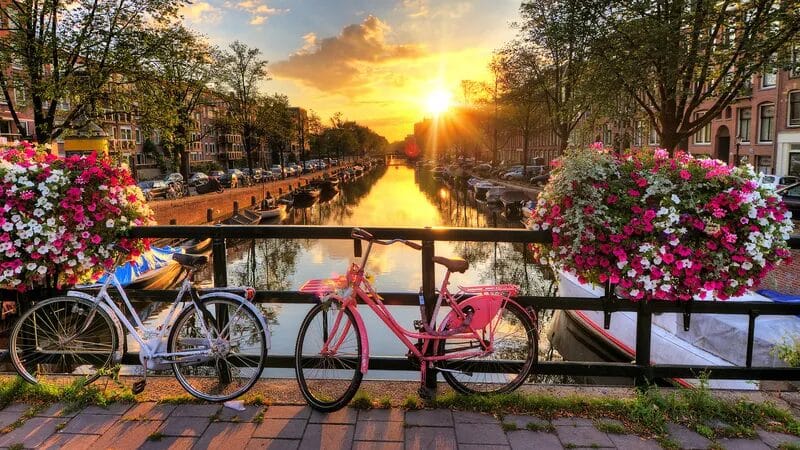
Amsterdam is also home to some of the world-renowned museums, such as the Van Gogh Museum and Rijksmuseum, which attract countless tourists every year. Apart from museums, the city is also famous for its coffee shops, red light district, and beautiful parks like Vondelpark, providing opportunities for relaxation and entertainment.
Vienna, Austria
Vienna, the capital and largest city of Austria, is a destination that offers a perfect blend of history, culture, and entertainment to its visitors. The city is renowned for its magnificent architecture, rich culture, and delectable cuisine.

It is home to several museums, including the famous Museum of Art History, which showcases a wide range of artworks from different artists. Vienna is also famous for its music, having had famous composers like Mozart, Beethoven, and Schubert spend parts of their careers there. From attending classical music concerts to exploring the beautiful streets, Vienna is a must-visit destination for anyone looking to immerse themselves in the rich Austrian culture.
Fazit
In conclusion, Schengen countries, with their ease of travel, cultural experiences, and stunning destinations, provide an excellent gateway to exploring Europe. From the romantic ambiance of Paris to the iconic landmarks of Rome, visitors can experience a perfect blend of history, culture, and entertainment.
With the right documents and a successful Schengen visa application, exploring the Schengen countries is quite hassle-free. Don't miss out on the opportunity to explore the top destinations in Schengen countries and create unforgettable memories. Plan your trip today and start packing your bags to explore all that Schengen countries have to offer.
Need a verified reservation today?
Get a flight itinerary or hotel booking with a real PNR you can look up on the carrier’s own site — delivered to your inbox.
Travel Documentation Expert at ReservationPoints
Helping travelers navigate flight & hotel reservations, visa documentation, and embassy requirements worldwide.